
What is a Rotary Encoder? Simply Explained
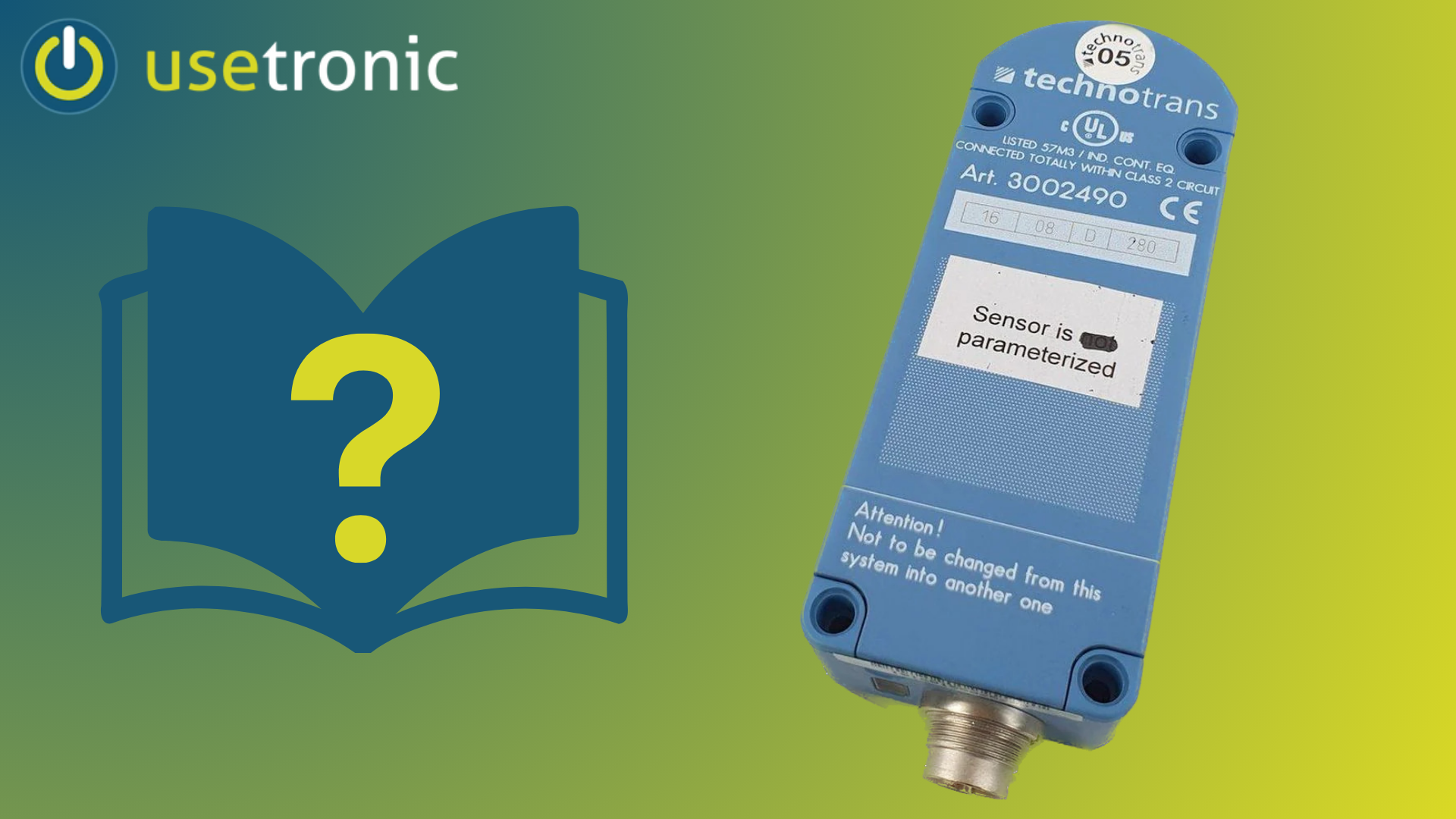
A rotary encoder (also called an encoder) is a sensor that converts mechanical rotational movements into electrical signals. These signals are used to detect the speed, direction, or precise angular position of a shaft – e.g. in machines, robots, or drives.
🔧 How does a rotary encoder work?
Rotary encoders typically work optically, magnetically, or inductively. A rotating element is scanned – e.g., a coded disc with light or magnetic patterns. Signal electronics convert the movement into digital or analog signals.
There are two main types of rotary encoders:
- Incremental encoders: output pulses used to calculate speed and direction
- Absolute encoders: output a unique position value – even after a power failure
⚙️ Where are rotary encoders used?
- Industrial drive systems: position and speed control
- Robotics: joint control and motion feedback
- CNC machines: high-precision position detection
- Conveyor systems: belt speed, counters
- Wind turbines: blade pitch control, tower alignment
✅ Advantages of rotary encoders
- ✅ High precision: accurate position and angle feedback
- ✅ Versatile: mechanical, electrical, or magnetic options
- ✅ Contactless versions: low-wear & maintenance-friendly
- ✅ Fast response: suitable for dynamic processes
⚠️ Disadvantages & Challenges
- ❌ Susceptible to dirt or vibration: especially in optical systems
- ❌ Calibration may be required: depending on the control system
- ❌ Absolute encoders: more expensive than incremental types
📊 Comparison: Incremental vs. Absolute Encoder
| Feature | Incremental Encoder | Absolute Encoder |
|---|---|---|
| Signal type | Pulse sequence | Unique position value |
| Reference required | ✅ Yes | ❌ No |
| Position after power loss | Lost | Retained |
| Cost | Lower | Higher |
🧠 Conclusion: When do you need a rotary encoder?
Rotary encoders are essential in any application requiring precise motion control. Depending on the accuracy requirements and control system, you can choose between incremental and absolute encoders. They are indispensable in modern industrial automation.
❓ Frequently Asked Questions (FAQ)
▶️ What does a rotary encoder measure?
A rotary encoder measures the angular position, rotation direction, and speed of a rotating shaft.
▶️ What's the difference between incremental and absolute encoders?
Incremental encoders output pulses – absolute encoders provide a unique position value, even after a power outage.
▶️ Are rotary encoders wear-free?
Optical and magnetic rotary encoders are contactless and thus almost maintenance-free.