
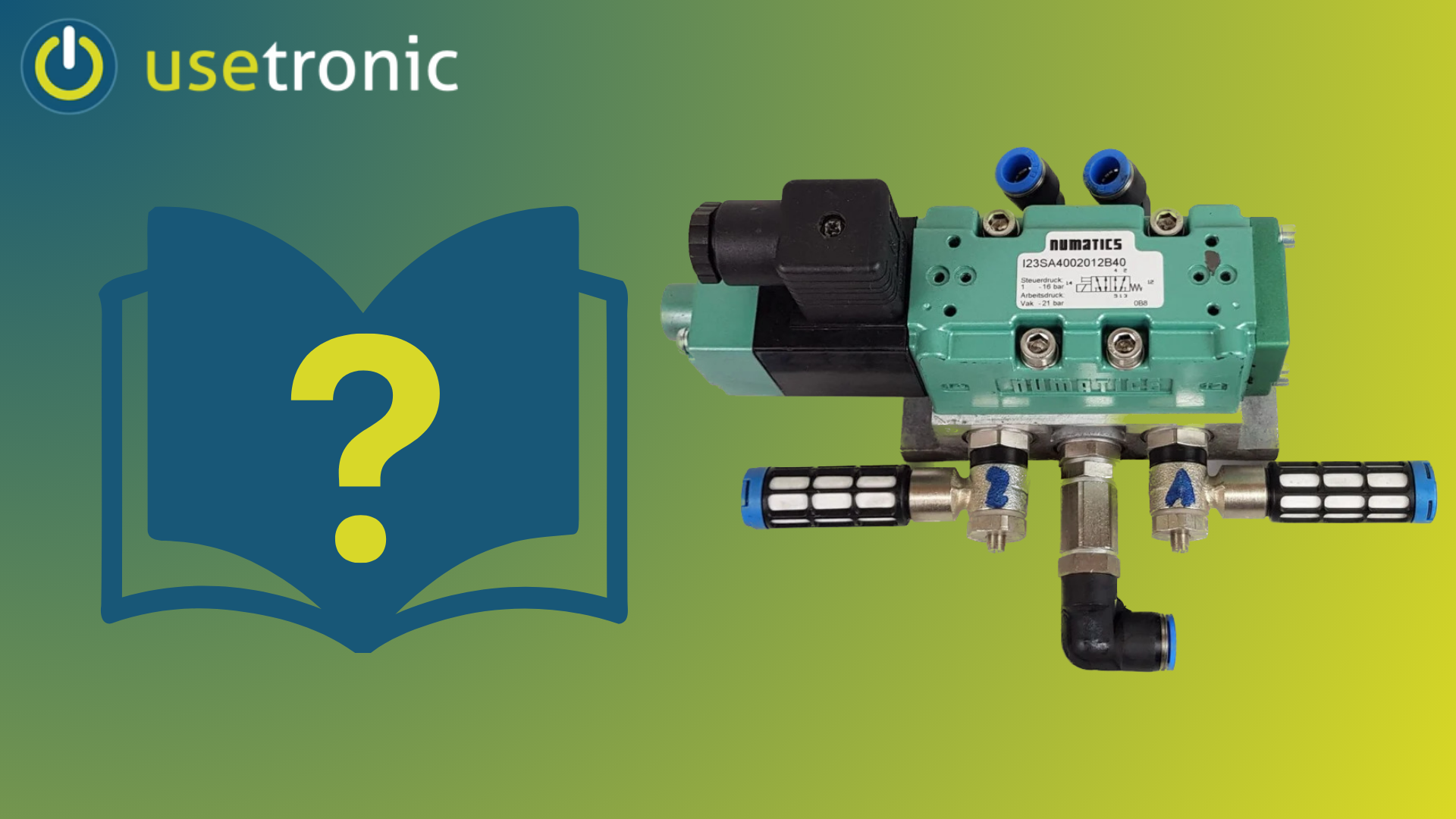
What is a Pneumatic Valve? Simply Explained
A pneumatic valve is a control valve that regulates the flow of compressed air in pneumatic systems. It opens, closes, or redirects air flows and controls the movement of actuators—such as cylinders, grippers, or tools—in industrial automation.
🔧 How Does a Pneumatic Valve Work?
Pneumatic valves regulate airflow using mechanical or electrical signals. They typically consist of:
- Inlets and outlets for air (e.g., P, A, B, R, S)
- Slide or piston elements to open or block air paths
- A control mechanism – mechanical, electrical, or pneumatic
Example: A 5/2-way valve with two switching positions and five ports can direct air to two outlets – useful for forward and backward movement of a cylinder.
⚙️ Typical Applications
- Industrial automation: controlling actuators, cylinders, and robots
- Packaging machines: operating grippers or separating flaps
- Vehicle systems: e.g., truck brakes or door controls
- Medical technology: dosing and air control in devices
- Building systems: controlling flaps or doors
✅ Advantages of Pneumatic Valves
- ✅ Fast response times – ideal for automated processes
- ✅ Cost-effective – especially for standard uses
- ✅ Reliable – mechanically robust and durable
- ✅ Easy to integrate – into existing systems
⚠️ Disadvantages & Challenges
- ❌ Dependent on compressed air – requires stable supply
- ❌ Noise – from exhaust air or switching operations
- ❌ Limited precision – compared to electric systems
🧰 Types of Pneumatic Valves
| Type | Function | Application |
|---|---|---|
| 3/2-way valve | Controls one air line with exhaust | Single-acting cylinders |
| 5/2-way valve | Two switching positions, two outputs | Double-acting cylinders |
| Flow control valve | Regulates air volume | Speed regulation |
| Check valve | Airflow in one direction only | Safety and control |
🤖 Comparison: Pneumatic vs. Solenoid Valve
| Feature | Pneumatic Valve | Solenoid Valve |
|---|---|---|
| Control type | Mechanical / pneumatic | Electrical |
| Response | Very fast | Fast |
| Cost | Low | Somewhat higher |
🧠 Conclusion: When is a Pneumatic Valve Worthwhile?
Pneumatic valves are essential components in automated processes where compressed air is used to control motion. They’re fast, reliable, and perfect for dynamic industrial applications. Choosing the right valve depends on system requirements, control type, and airflow volume.
❓ Frequently Asked Questions (FAQ)
▶️ What does a pneumatic valve do?
It controls airflow in pneumatic systems to trigger or stop mechanical movements.
▶️ What types of pneumatic valves exist?
Common types include 3/2-, 5/2-, and 5/3-way valves with manual or electric actuation.
▶️ How is a pneumatic valve controlled?
Via compressed air, electrically (e.g., solenoids), or mechanically using buttons or rollers.